

Jumping straight into custom software development without validating your idea is one of the most common and costly mistakes founders make. It feels faster to start building right away, but without a product validation strategy, you risk overspending on features nobody needs, choosing the wrong tech stack, and ending up with a product that can't scale.
For non-technical founders, the pressure is even greater. You're not just making tech decisions without a technical background, but also trying to balance investor expectations, limited resources, and the constant urgency to launch. That's why validation isn't just a step; it's the foundation for building scalable products that grow with your business.
In this article, we'll explain scalable custom software, the hidden costs of skipping validation, and how a validation-first approach helps you make smarter decisions from day one. We'll also show you how Designli's process with the SolutionLab and the Designli Engine helps founders confidently turn ideas into scalable products.
What does a Scalable Custom Product mean?
When we talk about custom software development, we're talking about building technology that fits your business, not the other way around. It involves extensive resources and the whole software and design team to ensure the final product and potential iterations are usable and bug-free.
But custom alone isn't enough. For SaaS founders, scalability separates a clever idea from a real business. A product that can handle growth without forcing you into costly rebuilds: more users, new features, additional integrations, all without breaking your foundation.
In practice, scalability looks like this:
- Adding features without rewriting your entire codebase.
- Handling 100 users today and 10,000 users tomorrow.
- Keeping investors confident because your tech can grow with demand.
In short, a scalable custom product adapts as your vision evolves.
The Real Cost of Skipping Validation
For many founders, building is their only focus in the early stages. They start developing code, designing screens, and doing anything that feels like tangible progress. However, without a clear product validation strategy, any advancement can end up at square one, with new costs to handle and less time on the clock.
Skipping validation can lead to:
- Rebuilds: Investing in features users don't want, only to scrap them later.
- Wasted budget: Spending resources on development before knowing if the idea resonates.
- Technical debt: Choosing a stack that works today but fails when you try to scale tomorrow.
- Investor hesitation: Pitching a product without proven demand makes funding much harder.
A validation strategy will save time and money. By testing assumptions early, you avoid dead ends and can launch faster and more confidently.
How Validation Leads to Better Tech Decisions
Validation isn't just about proving your idea works in the market; it also guides smarter technical decisions. When you take the time to validate, you learn which features matter most to your users, which workflows drive adoption, and which integrations are essential, key steps toward a clean and organized development process.
You will encounter scenarios that completely change your idea, and you will always look for the best way to scale.
Some examples can be:
Scenario 1:
If your validation shows users only care about two core features.
→ Outcome:
You don't need to over-engineer an entire platform on day one.
Scenario 2:
If early customers signal the need for heavy data processing.
→ Outcome:
You'll know to prioritize a backend that scales seamlessly.
Scenario 3:
If validation proves that your target audience responds to speed and simplicity.
→ Outcome:
You'll choose frameworks that allow for rapid iteration.
For non-technical SaaS founders, you don't have to guess or rely solely on developers' technical jargon. Instead, validation acts as valuable guidance, aligning your product's technical foundation with real-world user goals.
Designli's Approach: From Validation to Scale
At Designli, we believe in a well-structured process that can manage change, success, and constant learning. We always work through validation to scale products efficiently. To achieve that workflow, we developed specific work stages to give non-technical founders the outputs they need, precisely when we need them - and to maximize the odds of success.
The SolutionLab
This one-week sprint is designed to align our dedicated team with your goals from day one. The process emphasizes validating your concept, defining technical requirements, and mapping a clear development roadmap. At the same time, it's our chance to demonstrate quality, build trust, and lay the foundation for a strong long-term partnership. The SolutionLab is the ideal stage to test your ideas. Through an interactive prototype, you are closer to real-world validation.
The SolutionLab is capable of meeting non-technical founders where they are, with three different variants:
- If you are starting from scratch
- To regain control of a bad build
- To scale what you have already built
Designli Engine
After a successful one-week sprint with the SolutionLab, founders can optionally proceed into development with Designli by moving forward with a Dedicated product Team. When starting from scratch, the first step is to spin up a scalable foundation with the Designli Engine.
The Designli Engine is designed to help founders launch their MVP rapidly, giving an initial database, admin panel, and code structure foundation that the Dedicated Product Team can take there after.
The Designli Engine helps automate the initial backend codebase, including standard functionalities and database creation. This AI-driven code generator guarantees code 100% unique to your business, with no generic templates, owned by you and part of your valuable Intellectual Property.
Obtaining quality feedback provides unique value and insight. That’s why you can start collecting it early on by sharing the Clickable Figma simulation with people, when it's still just a navigable prototype. You can define a way even before the app is fully coded. Later on, after development, you will test even more with live users who sign up and pay. This crucial step helps you understand how users interact with your product and gives you the clarity to refine your core functionalities early, before investing heavily in scale.
Your idea is translated into a working MVP with speed, precision, and purpose. It streamlines development, boosts team productivity, and keeps your roadmap actionable. The result? A functional, feedback-driven product built to evolve has a much higher chance of success once it hits the market.
Hypothesis-Driven Development
Post-MVP, at Designli, we apply Hypothesis-Driven Development (HDD) to ensure that every new feature we build relates to a clear business goal. Instead of guessing, we form a hypothesis, measure its impact, and iterate with data. This ensures that validation isn't just a one-time exercise at the start but a continuous process that guides smarter tech decisions and keeps your product scalable as you grow.
Data Over Assumptions
- We use analytics and user feedback to guide major decisions. If we cannot measure something, we cannot improve it.
Business Growth at the Core
- Every feature must connect to a business outcome: increasing revenue, reducing churn, streamlining workflows, or opening new opportunities.
Metrics That Matter
- Through the Designli Engine, we establish a "command center" to monitor the metrics you care about and evaluate how new features perform against them.
Expert Guidance
- Our Product Owners act as your partners, interpreting data, refining hypotheses, and ensuring development decisions always align with your growth goals.
Our Hypothesis-Driven Development Cycle: Stabilize, Integrate, Enhance
Helping non-technical founders with what to build next, once the initial build is live, comes down to a science:
- Audit & Assess: Evaluate your current system to identify strengths and urgent needs.
- Prioritize & Plan: Analyze the backlog and create a roadmap for stability and quick wins.
- Define the "Why": Connect every new feature to a business hypothesis.
- Validate with Feedback: Use qualitative and quantitative data to confirm direction.
- Implement & Measure: Launch and track performance against goals.
- Refine & Repeat: Optimize what works, pivot where needed, and continue iterating.
Hypothesis Driven Development guarantees that development never drifts into "nice-to-have" features or tech for its own sake. Every sprint validates assumptions against business outcomes so your product scales purposefully, not wastefully.
The Risks of Building Before Validating
Even great companies have launched products with a potential outcome in mind. However, millions invested won't ensure success when users don't like or adapt to your idea.
Here are examples of products with a deficient validation strategy:
Amazon Fire Phone
Amazon released a new phone with features like dynamic perspective, Fire OS tie-ins, and synergy with Amazon’s content/retail ecosystem. Giving customers enough reasons to shift from popular brands like Apple or Android.
Why it failed:
Users found the phone's differentiating features confusing or insufficient, so they did not care enough to switch from long-term brands whose ecosystems they were already adapted to.

Source: Android Police
Apple Vision Pro
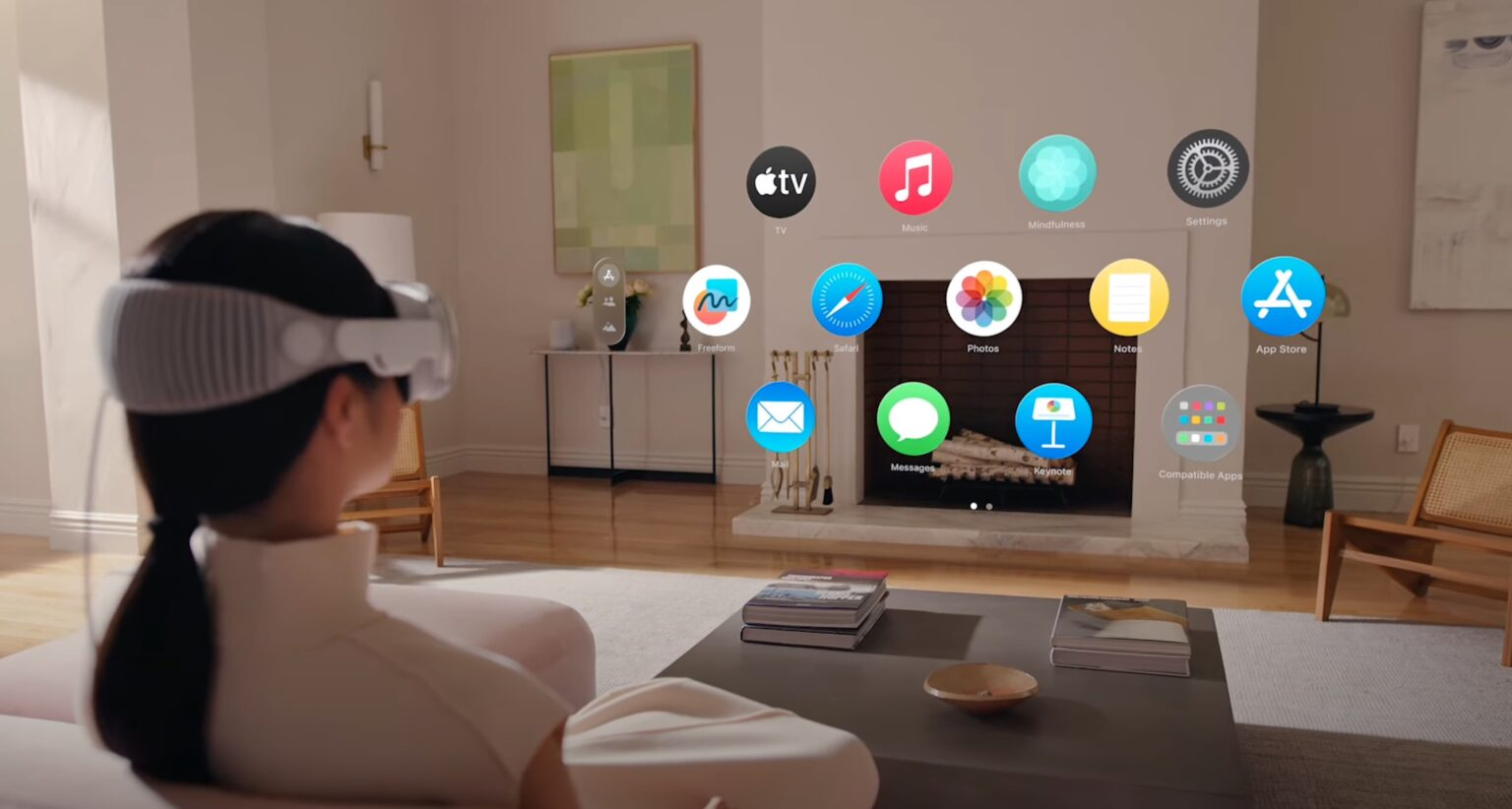
Apple launched the Vision Pro, a $3,500 headset meant to bring virtual and mixed reality into everyday life. It promised new ways to watch movies, work, and interact with apps in an immersive space.
Why it failed (so far):
The headset was too expensive for most people, and those who tried it often found it heavy and uncomfortable. Beyond the wow factor, there weren’t enough everyday uses to make it feel necessary. The Vision Pro struggled to gain traction without a clear reason to use it regularly.
Source: OSXDaily
Meta Horizon Worlds
Meta (formerly Facebook) launched Horizon Worlds as its flagship “metaverse” platform, where people could hang out, build virtual spaces, and socialize through VR. Its creators envisioned it as the future of online interaction.
Why it failed (so far):
Most people who tried it didn’t stick around. The graphics felt basic, the experience was buggy, and few worlds had any real activity. On top of that, many users simply weren’t interested in spending long hours inside VR. Without a strong reason to come back, Horizon Worlds quickly lost momentum.

Source: Phone Arena
Case Studies: Validation in Action
Secur.Space
Secur.Space set out to solve a clear industry problem: truck operators needed reliable short-term parking and storage, while property owners had unused Space to monetize. The founders validated this idea early through a business plan competition, proving demand before investing heavily in development.
The Validation Lesson
By focusing first on validation and smart prioritization, Secur.Space avoided wasted spend and built a product aligned with real market demand. This case highlights why grounding features in business goals and user needs creates scalable products, which is precisely what we emphasize with every Designli engagement.
Designli’s Role
SolutionLab → Audit system & features → Clear roadmap for scalable growth
Paidback
Amber Masters, facing the realities of massive student debt, saw that many people like her lacked the tools to make debt payoff motivating and social. The challenge was turning a deeply personal pain point into a scalable product that could help thousands stay accountable.
Validation Lesson
By validating the most important features early (like syncing banking transactions and building lightweight social features), Paidback avoided overspending on unnecessary complexity and launched with a clear growth path.
Designli’s Role
SolutionLab → Validated roadmap → Prioritized high-impact features
Icueity
Rebecca Heiss saw that leaders often had blind spots, gaps between how they viewed themselves and how their teams perceived them. The challenge was translating her big vision for continuous 360° feedback into a scalable, investor-ready product.
Validation Lesson
By narrowing the scope early and proving the value of its core functionality, Icueity avoided overbuilding. This disciplined validation gave Rebecca a stronger pitch for investors and a product roadmap designed to scale over time.
Designli’s Role
SolutionLab → Turn a broad vision into core features → Created a modular roadmap.
Building the Right Way
Custom products don’t scale by accident; they scale when validation is built into every process stage. Skipping this step often leads to costly rebuilds, stalled growth, and products that miss the mark. A well-structured validation strategy will increase your chances of creating a scalable product from day 1.
At Designli, we take pride in working with outstanding minds and helping them work effectively on a product from the early stages. We created structured processes like the SolutionLab or the Designli Engine to enhance great ideas and help them reach their potential. From an interactive prototype to a fully developed MVP, we ensure that every feature ties back to measurable business goals.
The result? Products that grow stronger over time and are ready to overcome roadblocks.
Ready to validate before you build? Let’s map your path to a scalable product.
You Might Also Like:


