

With rising user expectations, shorter attention spans, and more competition than ever, your product’s experience is what determines growth. That’s why more founders, especially those without a technical background, are turning to UX consultants to bridge the gap between what they’ve built and what users actually need.
In this article, we will go over what a UX consultant actually does, whether you need one, and how adding one to your team can add significant value.
What Does a UX Consulting Partner Actually Do?
You built the app, the MVPs live, but something’s off… New users tend to drop off halfway through the onboarding process. Customers are churning before they hit your “aha” moment. You’ve redesigned your signup flow twice, but it still feels like guesswork.
That’s when founders might start asking:
“Do I need a UX consultant?”
If you’ve never worked with one before, the title alone can feel vague. Aren’t they just designers? Or is this more like a strategy? Do they run usability tests? Redesign my product? Help with retention?
The truth: a great UX consulting partner helps you uncover what’s not working and why, so you can fix the real issues behind product friction and low engagement.
In this guide, we’ll break down what UX consultants actually do, how they help founders, especially non-technical ones, when to bring one in, and how to tell the difference between a UX consultant, designer, and product strategist.
What UX Consulting Looks Like in Practice
When founders hear “UX consulting,” it can sound abstract. In reality, it’s a hands-on process that helps you understand how people experience your product and what needs to change to improve clarity, activation, and retention.
Here’s what the work typically involves:
1. Discovery & Experience Mapping
The first step is understanding the journey your users go through. A consultant reviews your onboarding, main workflows, and key conversion moments to spot where people hesitate, stall, or drop off. This often includes user interviews, reviewing session recordings, or analyzing support conversations to see patterns in behavior.
2. Usability Audits & Light Testing
Next, the consultant examines your product flow by flow. They look for friction, confusing steps, unclear labels, or patterns that create unnecessary effort for users. In many cases, they’ll run quick usability sessions to watch people attempt core tasks. A handful of sessions is usually enough to surface the most important issues.
3. Clear, Actionable Recommendations
Once problem areas are identified, the consultant outlines specific improvements. These aren’t cosmetic suggestions; they’re focused on simplifying steps, clarifying intent, and helping users move through the product without friction. Founders often walk away with a ranked list of improvements tied to activation or retention goals.
4. Translating Insights Into Buildable Work
Finally, the consultant collaborates with your design or development team to translate insights into actionable tasks. That might include updated wireframes, revised copy, reorganized navigation, or small workflow shifts. The goal is to give your team direction that’s easy to execute and aligned with how users actually behave.
UX consulting is about understanding what your users experience today and providing your team with a clear improvement plan.
How UX Consulting Impacts Business Outcomes
Many teams treat UX as a design detail, but it’s often the silent factor behind churn, low engagement, and missed growth opportunities. A UX consulting partner connects product decisions with user behavior, helping you de-risk development and improve the metrics that actually matter.
Here’s how great UX consulting translates into real business results:
- Reduced churn and improved activation: When users don’t understand your product or can’t find value quickly, they disappear. UX consultants optimize key flows, onboarding, feature discovery, and feedback loops to ensure users stick around long enough to succeed.
- Lower rework and development costs: Every redesign or rushed pivot adds cost. With UX consulting, you validate flows before code is written, reducing wasted dev hours and costly backtracking later in the build process.
- Better team alignment across functions: Misalignment between design, product, and dev slows down progress. A UX consultant brings structure to discussions, anchors decisions in user needs, and prevents teams from building in silos.
- Faster, more confident product decisions: Instead of debating what users might want, you get insights grounded in real behavior. This leads to quicker decisions, clearer roadmaps, and less reliance on instinct or internal bias.
- Improved retention and monetization: Users are more likely to engage, convert, and upgrade when your product feels seamless. UX consulting helps create those micro-moments of delight that drive long-term growth.
If your product isn’t gaining traction, UX might be the bottleneck, and strategic UX guidance could be your most cost-effective lever.
UX Consulting for Non-Technical Founders
If you’re a SaaS founder without a technical or design background, product decisions can feel like educated guessing. You might know the user problem better than anyone, but translating that vision into an intuitive experience often leads to confusion, rework, or features that fail to take hold.
That’s where a UX consulting partner steps in. Their role isn’t just about visual polish; it’s about helping define what success looks like through the user’s eyes.
A UX consultant helps you clarify the core experience your product should deliver. Instead of jumping straight to features, they work with you to map the journey: what the user needs, where they might get stuck, and how to guide them toward value. They also help identify friction points early, often before they appear in your metrics, by using tools like usability tests or feedback audits to understand where users are struggling and why.
Just as importantly, UX consultants bring focus. When there’s a long list of possible changes, they help prioritize the improvements that will actually move the needle, whether it’s activation, retention, or reduced support tickets. And for many founders, they serve as a critical bridge between vision and execution. UX consultants can translate high-level goals into flows and requirements your dev team can run with.
For non-technical founders, UX consulting brings clarity, confidence, and strategic alignment without requiring you to become a UX expert.
How to Know If You Need UX Consulting
You don’t need a massive UX budget to justify expert help. If your product has traction or should have traction but isn’t clicking with users, a consultant might be your fastest path to clarity.
Ask yourself:
- Users are signing up… but not sticking around?→ You might have an activation or onboarding problem that design alone can’t fix.
- Are you unsure why users abandon key flows?→ Drop-off without insight often signals deeper UX friction that needs diagnosing.
- Have you redesigned multiple times with slight improvements?→ When new designs don’t move the metrics, it’s time to revisit the strategy, not the UI.
- Is retention falling as you scale?→ Growth magnifies UX issues. What worked at 100 users might break at 1,000.
- Are you making product calls based on guesses rather than user behavior?→ Without structured feedback and guidance, it’s easy to build in the dark.
- You built an MVP, but engagement feels flat?→ A UX consultant can help you rework flows, clarify value, and test what users really want.
If any of these sound familiar, you don’t need another redesign; you need a UX strategy.
UX Designer vs UX Consultant vs Product Designer
| Role | Primary Focus | Typical Engagement | Best When You Need |
|---|---|---|---|
| UX Designer | Creates wireframes, prototypes, and user flows | Hired to execute a defined scope or set of screens | Visual design execution and interface production |
| UX Consultant | Analyzes user behavior, identifies friction, and recommends a UX strategy | Embedded as a strategic advisor, often before design starts | Guidance on what to build, why, and how to validate it |
| Product Designer | Blends UX/UI with product thinking and user needs | Usually part of a product team or agency; owns design + experience | A generalist who can design and shape features as part of a roadmap |
If you already know what to build, a UX designer can bring it to life. If you’re not sure why users aren’t engaging or which direction to go, a UX consultant gives you the clarity to move forward with confidence.
The Designli Approach: UX Clarity Before Code
At Designli, we don’t just design screens; we help non-technical founders shape experiences that work and have the foundation to evolve accordingly.
Solution Lab
Our process begins with the SolutionLab, a focused sprint designed to clarify what your users actually need, where they might encounter challenges, and how to guide them through the experience smoothly. Instead of jumping into design tools, we map the real journey of what success looks like from a user’s point of view and define what the product must do to deliver that. This creates an interactive prototype that provides a clear visualization of the following steps and roadmap development.
Designli’s UX Consulting Examples:
Cabin Time: Launching with Purpose
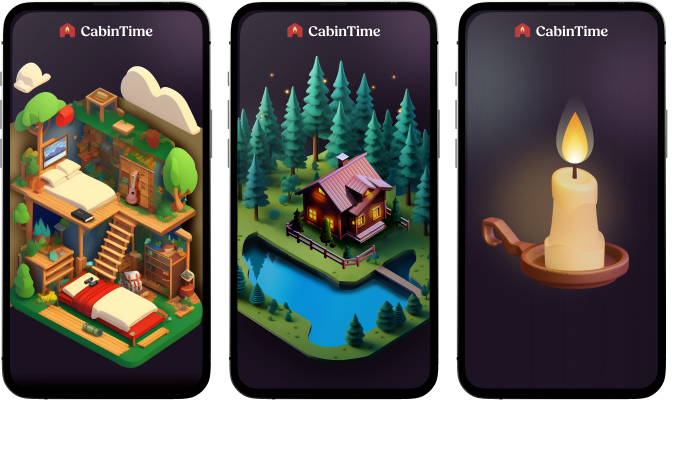
For Cabin Time, a strict, grant-funded timeline meant the team had to be strategic from day one. UX consulting played a pivotal role. During our SolutionLab sessions, we used tools like the Impact vs. Effort Matrix to help the founders prioritize the right features for launch. High-impact elements, such as the nostalgic "campy" aesthetic and age-specific content tailored to campers and parents, were built into the MVP. Lower-priority ideas were documented for future phases. This gave the team clarity and confidence: every dollar and hour went into features that supported Cabin Time’s mission of delivering a transformative faith-based experience. No bloat, no distractions, just focus where it mattered most.
Behind the Knife: Turning Insights Into a Premium UX
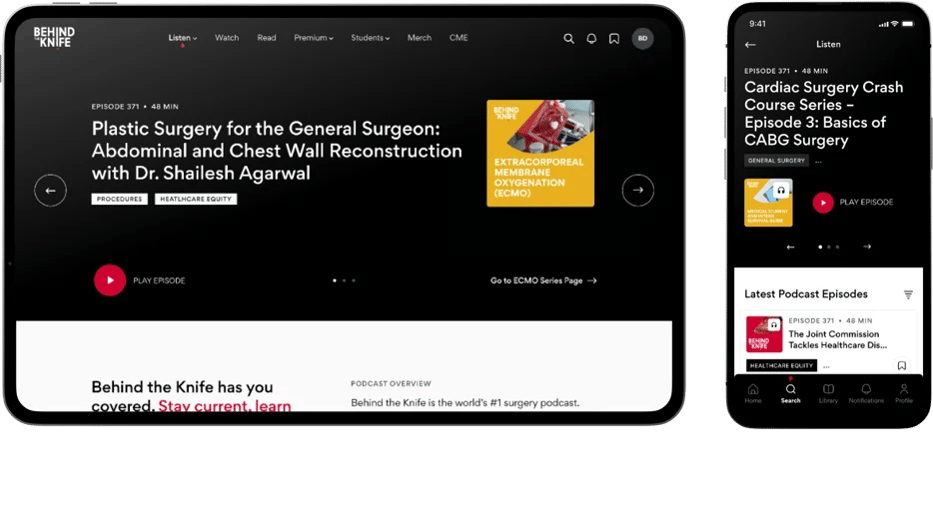
Before rebuilding Behind the Knife’s platform, our UX consultants started with a deep dive into the product’s data. We analyzed user behavior, device usage, and conversion drop-off points to surface the most critical UX challenges. That analysis informed a complete redesign, both intuitive and visually enhanced, fit for a premium medical education brand. We then integrated a custom payment workflow that removed friction and unlocked monetization opportunities. The result was a modern, subscription-ready platform that transformed a podcast archive into a polished e-learning product, all grounded in user insights rather than guesswork.
Designli Engine
Then, we use the Designli Engine to turn validated UX flows into a lean, scalable MVP. This means every screen and interaction has a purpose, with no wasted effort and no feature clutter. It’s all about building just enough to test, learn, and grow confidently. Our process prioritizes accuracy through a Dedicated Product Team.
Hypothesis-Driven Development
After launch, we apply Hypothesis-Driven Development (HDD) to evolve the product based on user behavior, rather than relying on guesswork. Every change is tied to a real-world insight or metric, keeping your UX lean and aligned with business goals.
Here’s how we manage the backlog with HDD:
- Start with a business goal: Maybe it's fixing a conversion drop-off or unlocking a new revenue stream. Every change starts with a clear problem or opportunity.
- Pick a metric that matters: Activation rate, usage frequency, sales, whatever moves your product forward. We'll help define and workshop these with you.
- Make a measurable hypothesis: “If we add a referral flow, we expect a 20% lift in signups.” If we can’t clearly state the expected outcome, it doesn’t go in the backlog.
- Ensure we can track it: This may involve setting up analytics, tracking events, or creating a dashboard. If you can’t measure it, you can’t validate it.
- Build, launch, analyze: Once the feature’s live, we monitor the results in real time using tools like our Command Center to connect user behavior to real outcomes. If it works, great. If not, we refine or rethink our approach.
We help you avoid rework, misaligned features, and costly UX mistakes by building from clarity, not assumptions. Designli bridges the gap between your vision and what users actually experience, so your product not only works, it works on purpose.
FAQs
What’s the difference between a UX designer and a UX consultant?
A UX designer is focused on creating screens, flows, and visual interactions. A UX consultant works at a more strategic level, helping define product direction, validate assumptions, improve usability, and align user needs with business goals.
Do I need a UX consultant if I already have a product designer?
If your designer is deeply immersed in execution (mockups, components, Figma), a UX consultant brings a broader perspective: framing problems, analyzing user behavior, conducting discovery, or helping prioritize what to build next.
When’s the right time to bring in UX consulting?
If you're seeing poor activation, retention, or user confusion but don’t know why, it’s time. It’s also valuable during MVP planning, or before major redesigns.
Is UX consulting only for big companies?
Not at all. In fact, early-stage and scaling SaaS founders often benefit the most. UX consultants help you avoid costly missteps, move faster with more confidence, and build products that solve real user problems without bloated dev cycles.
Clarity Over Guesswork Wins
At some point, every founder hits the same wall: We built what we thought users needed… but something’s not clicking. That’s where a UX consultant steps in, not to redesign buttons or polish pixels, but to help you understand your users more deeply and design with intention.
A UX consulting partner helps you see what users feel and translate that into smarter product decisions, better activation, and stronger retention. Instead of guessing what to build next, you’re building with confidence, backed by real insight.
For non-technical founders, especially, UX strategy can be the difference between a product that quietly fades and one that scales.
If you want to take your UX practices through a well-structured process, schedule a free consultation.
You might also like:


